What Should a Commercial Cleaning Proposal Include?
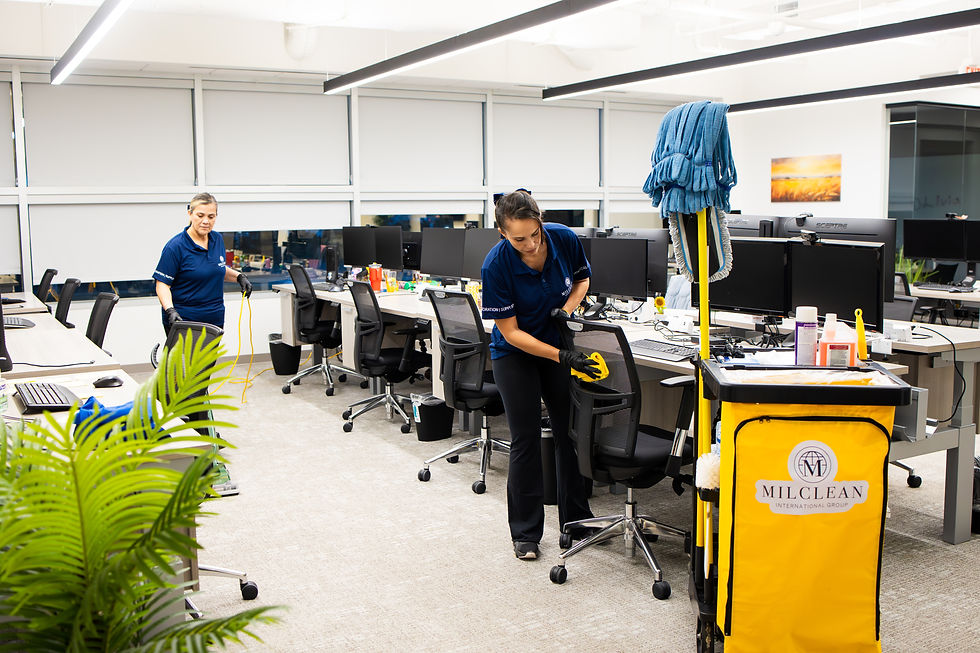
A commercial cleaning proposal should explain exactly what will be cleaned, how often the work will happen, who will manage it, and what the quoted price includes. For facility managers comparing commercial cleaning services in South Florida, those details make the difference between a useful operating plan and a price that is difficult to evaluate.
An office building, retail property, and event facility may all need janitorial services, but their priorities differ. The best starting point is a proposal built around your building, schedule, and expectations. Use the following commercial cleaning proposal checklist to compare providers on the work your property actually needs.
Start with a documented facility walkthrough
A practical proposal begins with an understanding of the property. Ask the provider to review cleanable areas, floor materials, occupancy, restroom use, entrances, and any spaces requiring restricted access. Share floor plans if available, but also identify concerns that a drawing will not reveal.
For example, a conference room used occasionally needs a different discussion from a lobby that welcomes visitors throughout the day. A tenant moving in next month may change both the cleaning workload and access arrangements. Tell each bidder about those conditions so the proposals start from comparable assumptions.
The written proposal should identify the buildings, floors, and rooms included. It should also record assumptions about square footage and operating hours. This gives both parties a reference when the facility changes.
Require a clear commercial cleaning scope of work
General phrases such as complete cleaning or full janitorial service leave room for different interpretations. A clear commercial cleaning scope of work connects specific tasks to specific areas.
Look for a description of work in reception areas, offices, meeting rooms, restrooms, breakrooms, corridors, and shared spaces. Depending on your building, that could include waste removal, surface cleaning, vacuuming, hard-floor care, and restroom servicing. Clarify whether desk surfaces must be clear before cleaning and whether staff may move personal items.
Include boundaries as well. Interior glass, high surfaces, appliances, loading areas, and exterior entrances should be identified individually when they matter to your property. Do not assume that a service is included because it appears elsewhere on a provider's website.
Match cleaning frequency to building use
The schedule should show which tasks happen every visit, which happen weekly, and which require periodic appointments. A task list without frequencies makes it hard to understand the service you are buying.
Ask for a simple area-by-area schedule. You should be able to see when restrooms are serviced, when offices are cleaned, and how common areas receive attention. Confirm the available work window, building holidays, and arrangements for tenant meetings or evening events.
For South Florida properties with outdoor entrances or visitor activity that changes throughout the year, discuss how the schedule will be reviewed when conditions change. Any adjustment should have a clear approval process and an explanation of whether pricing changes.
Separate recurring janitorial service from periodic floor care
Daily or nightly cleaning and periodic floor maintenance should be easy to distinguish in the proposal. Ask whether carpet cleaning, floor restoration, upholstery cleaning, and other specialty work are included in the recurring fee, scheduled separately, or quoted on request.
For carpeted areas, the Carpet and Rug Institute distinguishes routine maintenance, interim maintenance, and deep cleaning. Its commercial standard recommends building the maintenance plan around the carpet and the facility's conditions, together with manufacturer guidance. That makes a separate carpet-care schedule a useful part of the discussion. See CRI's commercial carpet maintenance standard.
Avoid comparing one proposal with periodic carpet care included against another covering only routine vacuuming. Ask both providers to show the same service categories before reviewing the totals.
Establish communication and quality expectations
A commercial cleaning proposal should explain how the relationship will work after the first visit. Request a named role for your main contact, a process for reporting concerns, and a description of how supervisors review completed work.
Quality checks should relate to the agreed scope. A useful inspection can record the area reviewed, the issue found, the corrective action, and its status. Ask how recurring concerns will be addressed and when you will meet to review the service.
Confirm responsibility for keys, access credentials, storage space, and closing procedures. Also discuss the plan for staffing changes and missed visits. These are operational questions to settle before they interrupt your building's routine.
Read the pricing and exclusions together
A clear janitorial services proposal connects the price to the scope and schedule. Identify the recurring fee, separately priced tasks, startup work, and any assumptions that affect the total.
Ask who provides cleaning equipment, cleaning products, trash liners, paper products, and restroom supplies. Consumables and their replenishment can be separate responsibilities. Confirm how additional visits, event cleaning, or newly occupied space will be requested and approved.
For a fair comparison, use the same facility information with every bidder. Then compare the work included, the planned frequency, and the service-management process alongside the price. A lower total may reflect a smaller scope rather than a better fit.
Confirm the transition and first service date
Before approving an office cleaning proposal, agree on the next steps: access arrangements, a final walkthrough, supply responsibilities, the first scheduled visit, and the first service review. If there is an existing provider, identify what must be transferred before the new team starts.
A written transition plan gives your staff a practical way to prepare and gives the cleaning provider the information needed to begin.
Request a proposal built around your facility
MilClean USA provides commercial janitorial services and has a South Florida office in Deerfield Beach. When you request a commercial cleaning proposal, share your property type, location, operating hours, and priority concerns. Start the conversation with a walkthrough and a defined scope so you can evaluate a cleaning plan that fits your facility.
Comments